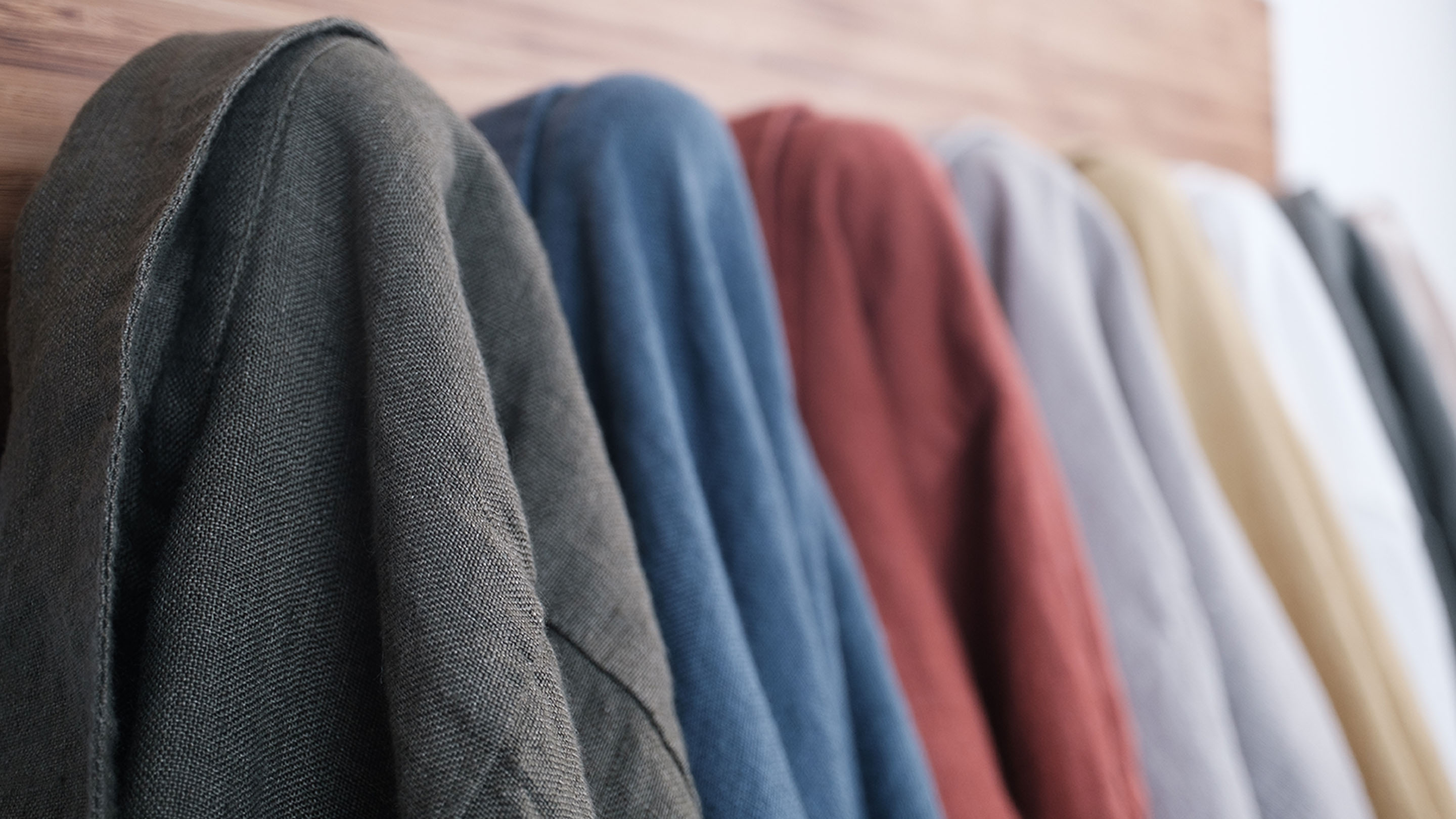
FLAX Linen Fabrics Guide
At FLAX, fabric comes first. Each linen weight serves a purpose — from airy summer layers to structured, cooler-weather staples — allowing you to choose the right fabric for your lifestyle and season.
Below is a guide to the linen fabrics used across our collections.
Gauze Linen
- Weight: Lightest
- Coverage: Sheer
- Feel: Soft, delicate, and airy with beautiful texture
- Best For: Warm-weather layering, lightweight cover-ups, day-to-night wear
- Care: Machine wash warm. Avoid ironing to preserve texture. May appear to shrink after washing, but relaxes back into shape when worn. Lay flat or tumble dry on low.
Gauze linen offers an ultra-light, breathable feel with subtle depth. It's perfect for effortless layering and warm-weather comfort.
Handkerchief Linen
- Weight: Lightest
- Coverage: Semi-sheer in lighter colors
- Feel: Airy, fluid, and softly draped
- Best For: Warm-weather tops and flowing silhouettes
- Care: Machine wash warm. Wash colors separately. Tumble dry low. Ironing optional.
Handkerchief linen is prized for its barely-there feel and graceful movement, making it ideal for lightweight summer pieces.
Lightweight Linen
- Weight: Light
- Coverage: Full
- Feel: Breathable and fluid with slightly more substance than handkerchief
- Best For: Everyday wear in warmer months
- Care: Machine wash warm. Wash colors separately. Tumble dry low. Ironing optional.
This is a versatile linen that balances comfort and coverage, making it a favorite for warm-weather dressing.
Yarn Dye Linen
- Weight: Light
- Coverage: Full
- Feel: Breathable with added visual depth
- Best For: Stand-alone pieces in warm months and layering in cooler seasons
- Special Feature: Woven with two or more colored threads for rich texture and dimension
- Care: Machine wash warm. Wash colors separately. Tumble dry low. Ironing optional.
Yarn-dyed linen offers visual interest and depth while maintaining the breathability FLAX is known for.
Medium Weight Linen
- Weight: Medium
- Coverage: Full
- Feel: Substantial yet breathable
- Best For: Year-round wear and layering
- Special Feature: Balanced weight for structure without heaviness
- Care: Machine wash warm. Wash colors separately. Tumble dry low. Ironing optional.
This is the core FLAX linen — durable, comfortable, and ideal for everyday wear in all seasons.
Panama Linen
- Weight: Medium
- Coverage: Full
- Feel: Cozy with a sweater-like texture
- Best For: Transitional dressing and layering
- Special Feature: Woven with thicker yarns for added texture and warmth
- Care: Machine wash warm. Wash colors separately. Tumble dry low. Do not iron to preserve texture.
Panama linen offers a unique hand feel with a slightly heavier, more textured look.
Homespun Linen
- Weight: Heaviest
- Coverage: Full
- Feel: Substantial, soft, and naturally insulating
- Best For: Cooler months and structured styles
- Special Feature: Excellent warmth while remaining breathable
- Care: Machine wash warm. Wash colors separately. Tumble dry low. Ironing optional.
Homespun linen is FLAX's most substantial fabric, offering comfort and warmth without sacrificing breathability.